Why Should I Baptize My Baby? | Infant Baptism Explained
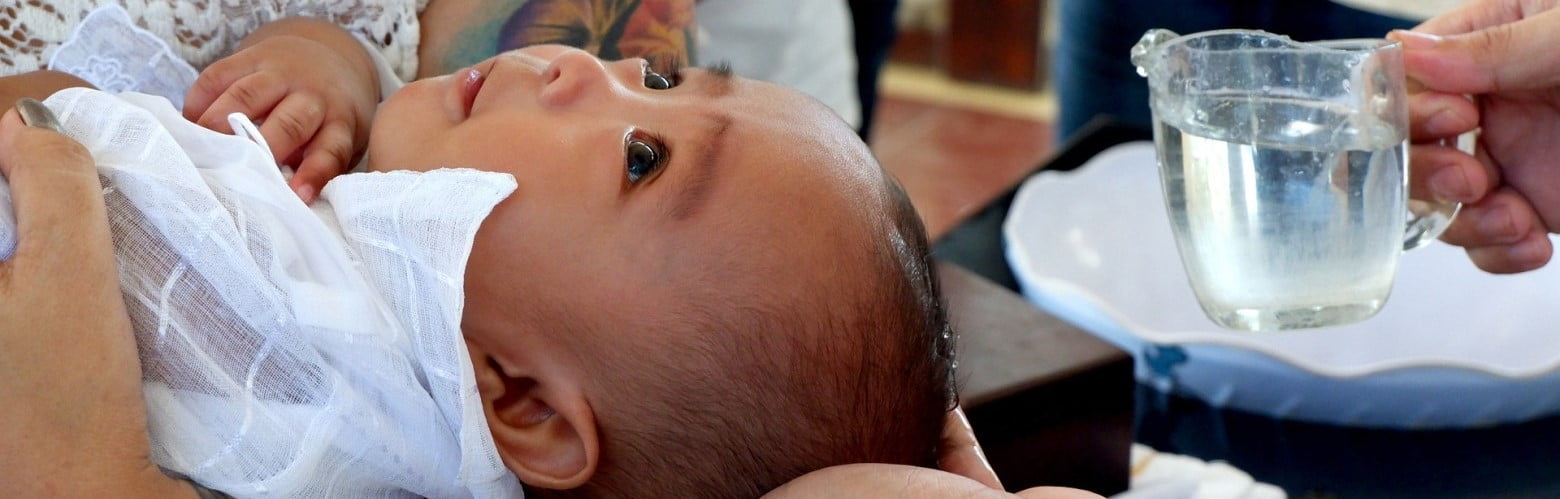
Why Have Your Baby Baptized? The Importance of Infant Baptism
Having your baby baptized in the Catholic Church is not optional. It is essential to baptize your baby to remove original sin from their soul, restore them to God's friendship, allow God to dwell within them, restore sanctifying grace to the soul, and make Heaven possible. There are five critical reasons to have your baby baptized as soon as possible after birth.
⚠️ Important: Do not delay your baby's baptism. The Church teaches that infants should be baptized as soon as possible after birth. The eternal salvation of your child depends on this sacred Sacrament.
1. Infant Baptism Is Necessary For Salvation
While Baptism was instituted by Christ at His own Baptism by St. John, it was not yet made necessary for salvation until after Our Redeemer's triumphant Resurrection. At that time, it became necessary for salvation as the Roman Catechism explains: "Holy writers are unanimous in saying that after the Resurrection of our Lord, when He gave to His Apostles the command to go and teach all nations: baptizing them in the name of the Father, and of the Son, and of the Holy Ghost [Matt. 28:19], the law of Baptism became obligatory on all who were to be saved."
The Council of Trent in the 16th century infallibly stated that Baptism is necessary for salvation: "If anyone says that baptism is optional, that is, not necessary for salvation, let him be anathema" (Canons On Baptism, Session VII, Council of Trent). Our Lord Himself taught: "Amen, amen I say to thee, unless a man be born again of water and the Holy Ghost, he cannot see the kingdom of God" (John 3:5).
But can unbaptized babies still go to Heaven? Unfortunately, no—because Christ our Lord taught us that Baptism is necessary going forward. The Baltimore Catechism teaches: "Persons, such as infants, who have not committed actual sin and who, through no fault of theirs, die without baptism, cannot enter heaven; but it is the common belief they will go to some place similar to Limbo, where they will be free from suffering, though deprived of the happiness of heaven" (Q. 632).
To those who ask, "Do you have to be baptized to go to heaven?" the answer is yes—that is what Christ taught us. What of those who have died? We entrust them all to the Sacred Heart of our Lord Jesus Christ. God has bound salvation to the sacrament of Baptism, but He Himself is not bound by His sacraments. Still, do not presume upon God's mercy by delaying your child's Baptism. Baptize your baby promptly and ensure they have access to this essential grace.
2. Baby Baptism Removes Original Sin From the Soul
Baptism first and foremost clears all sin from our soul. Every human person aside from the Blessed Virgin Mary was conceived with original sin. Note: Our Blessed Lord was also conceived without original sin, but He was a divine person, not a human person.
Since original sin on a person's soul would prevent them from entering Heaven, it is absolutely essential for your baby to be baptized as soon as possible to remove this sin. For this reason, if an infant is in danger of death in the hospital, a priest will perform an emergency Baptism immediately. The urgency reflects the gravity of original sin.
After Baptism, your child has sanctifying grace in their soul and at that moment becomes a child of God, restored to divine friendship and made an heir to eternal life.
3. Infant Baptism Makes Your Baby A Child of God
The Church has always taught that the Sacrament of Baptism can and should be conferred on children. In Baptism we are "born again"—it is the start of the life that continues in the next. Since Baptism is the beginning of spiritual life, a child should be baptized as soon as possible to have a share in divine sonship. As Jesus says, "Suffer the little children to come unto me, and forbid them not; for of such is the kingdom of God" (Mark 10:14).
In the Gospel, Jesus instructs us to go forth and baptize the whole world—not just adults. Saint Paul baptized whole families, and it is most likely there was at least one child in those families (Acts 16:15; 1 Cor. 1:16). The Third Council of Carthage (253 AD) with Saint Cyprian taught that infants should be baptized as soon as possible after birth. This teaching was reaffirmed at the Council of Milevis (416 AD), the Fourth Lateran Council, and the Councils of Vienne, Florence, and Trent.
4. Baptism Enriches Your Baby With Divine Grace and Blessings
Do you want to set your child up for success in life? Then you must start with Baptism. The Catechism of the Council of Trent states: "It should be taught that by virtue of this Sacrament we are not only delivered from what are justly deemed the greatest of all evils, but we are also enriched with invaluable goods and blessings. Our souls are replenished with divine grace, by which we are rendered just and children of God and are made heirs to eternal salvation."
Through Baptism, your child receives sanctifying grace—the very life of God dwelling in their soul. This grace enables them to grow in virtue, resist temptation, and live a holy life. Baptism also opens the way for your child to receive the other Sacraments throughout their life: Reconciliation, the Holy Eucharist, Confirmation, and eventually Marriage or Holy Orders.
5. The Church Requires Parents To Baptize Their Babies
The Church makes it abundantly clear that having your child baptized is required, and failing to do so is a very serious sin. The Baltimore Catechism teaches: "It is wrong to defer the baptism of an infant, because we thereby expose the child to the danger of dying without the Sacrament" (Q. 642).
The Code of Canon Law states: "Infants should be baptized as soon as possible; pastors and preachers should frequently stress with the faithful the gravity of their obligation" (Canon 867). This is not a casual suggestion—it is a binding obligation rooted in Christ's command and the Church's understanding of salvation.
✓ Key Point: The Church recognizes the gravity of this obligation by requiring parents and godparents to complete a preparation course. This ensures you understand the meaning and importance of the Sacrament you are receiving.
Why Not Wait Until They're Older? A Biblical and Theological Answer
Many parents today ask: "Why should I baptize my baby? Why not let them choose when they're older?" This objection misunderstands both Scripture and the nature of Baptism itself.
Scripture Supports Baptizing Babies
In the New Testament, we see entire households being baptized, which certainly included children and infants. Saint Paul baptized the household of Lydia (Acts 16:15) and the household of the Philippian jailer (Acts 16:33), and later wrote: "For as much as one person in the household has been baptized, I have baptized the whole house" (1 Cor. 1:16). The early Church understood that Baptism is for all people—children and infants included.
Parents Make Crucial Decisions for Their Children
Parents decide where children live, what they eat, what schools they attend, and what values they learn. Similarly, parents have the duty and the privilege to baptize their children. You do not wait for your child to "choose" food, shelter, or education—you provide these essentials immediately. Baptism, which opens the way to eternal salvation, deserves the same urgent priority.
Don't Gamble With Your Child's Soul
Delaying Baptism exposes your child to grave spiritual danger. If your baby were to die unbaptized, they would be forever separated from God. The Church teaches this not to frighten parents, but to emphasize the urgent necessity of Baptism. Why would any loving parent delay this essential Sacrament? Baptize your baby now and give them the grace and protection they need.
Baptism Is a Gift, Not a Choice
Baptism is not a personal achievement or a conscious decision—it is a gift from God given through the Church. The grace of Baptism works through the power of Christ, not through the baptized person's understanding or consent. Your baby does not need to comprehend the Sacrament for it to bestow its grace. In fact, Baptism is precisely the foundation upon which later understanding will grow.
Preparing for Your Baby's Baptism
The Church requires parents and godparents to complete a Baptism preparation course to understand the meaning and obligations of the Sacrament. This is not a burden—it is an opportunity to deepen your faith and prepare your heart for this sacred moment.
🙏 Parent & Godparent Baptism Class
Our online Baptism preparation course fulfills parish requirements and can be completed at your own pace, anytime, from any device. Learn the theology of Baptism, the meaning of godparents' role, and what to expect during the ceremony.
What Parents and Godparents Say About Our Baptism Class
"This class helped me understand the true meaning of Baptism and why it's so important for my baby. I felt so much more confident and prepared for the ceremony. Highly recommend!"
– Rebecca M., New Parent | Baptism Class Review
"As a godparent, I wanted to understand my role and responsibilities. This class made it clear that being a godparent is a spiritual obligation, not just a title. Thank you!"
– Michael T., Godparent | Baptism Class Review
Don't Delay—Baptize Your Baby Today
Your baby's eternal salvation depends on Baptism. The Church's teaching is clear: infants should be baptized as soon as possible after birth. Do not expose your child to the risk of dying without this essential Sacrament.
Take the first step by contacting your parish about scheduling your baby's Baptism. Then, prepare yourself and your chosen godparents by completing our parish-approved online course.
Start Your Baptism Preparation Now
Other helpful resources:
Baptism Requirements for Parents and Godparents | Catholic Baptism Etiquette | Sacramental Preparation